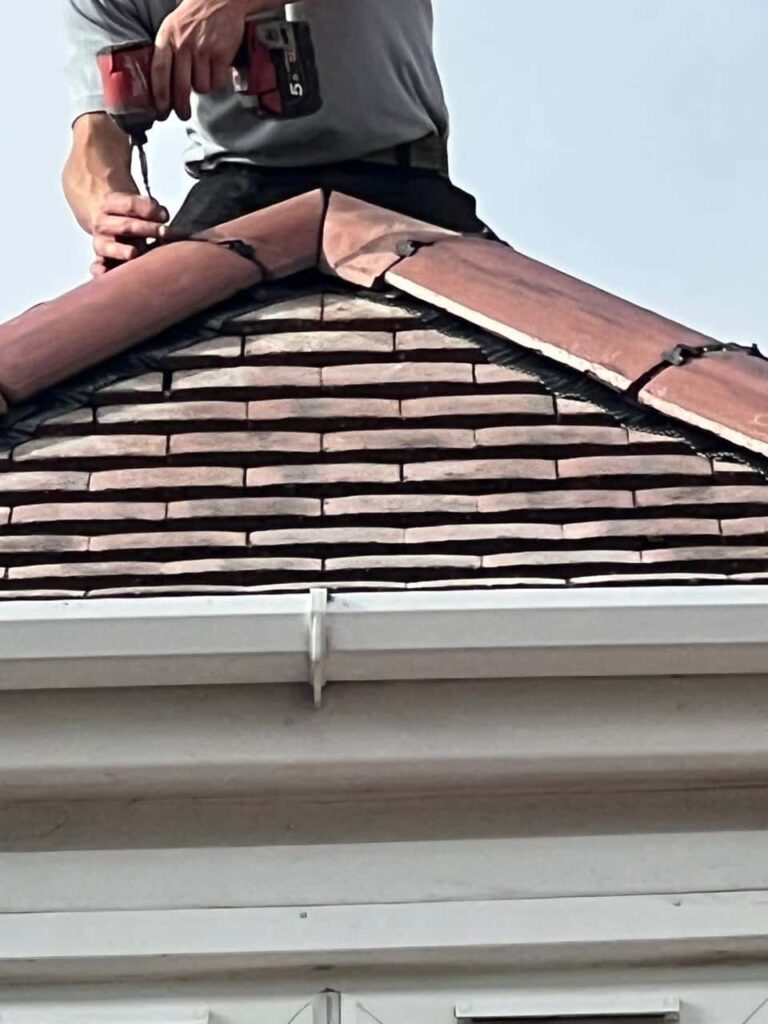
Most homeowners hope that a roof leak can be fixed quickly with a straightforward repair. In many cases, that is true — a slipped tile, cracked flashing or damaged ridge can often be put right without major work. However, some leaks are symptoms of deeper issues within the roof structure, and in these situations, repairs alone may not be enough to stop the problem from returning.
At East Grinstead Roofing Repairs in East Grinstead, West Sussex, we regularly assess roofs where leaks persist despite multiple repair attempts. Understanding why certain leaks require a roof replacement helps homeowners make informed decisions that protect their home long-term.
When a Leak Is More Than a Localised Problem
A simple, isolated leak normally has a clear cause. But when water finds its way into the property through multiple areas or keeps reappearing after repairs, it often indicates that the roof no longer functions as a complete weatherproof system.
In these situations, the underlying issue is usually more extensive than a single damaged component.
Damaged Underlay Often Means Repairs Won’t Last
The underlay beneath your tiles is one of the most important layers of the roof. Once this membrane becomes torn, brittle or worn out, water can enter even if the tiles themselves are intact.
Common signs of underlay failure include:
- Leaks during wind-driven rain
- Dampness in loft spaces
- Water entering from different points across the roof
- Recurring leaks despite tile repairs
If large sections of underlay are compromised, replacing the roof is often the only reliable long-term solution.
Long-Term Moisture Damage Weakens the Structure
If a leak has been active for months or years, moisture can spread through the rafters, battens and fixings. Even if tiles or flashing are repaired, the weakened structure may continue to let water through.
Moisture-damaged components may:
- Rot or become soft
- Lose their ability to support tiles
- Shift out of alignment
- Allow future leaks to form elsewhere
Because these issues are hidden beneath the surface, replacing the full roof is often the safest and most effective option.
Multiple Failing Components Work Against Each Other
Older roofs often develop several problems at once — slipped tiles, worn ridge mortar, cracked flashing and deteriorated underlay. Repairing these areas individually may not restore the roof’s overall integrity.
When too many elements are failing simultaneously, a full replacement ensures:
- Correct alignment
- Improved ventilation
- Renewed waterproofing
- Stronger structural support
This holistic approach prevents the cycle of recurring leaks.
Storm Damage Can Exceed Repair Limits
Severe weather can cause widespread disruption to the roof system, loosening fixings, lifting tiles and allowing water to enter beneath the surface. Even if some damage is not immediately visible, the roof may be left structurally weakened.
In these cases, a replacement ensures the roof is safe, secure and capable of withstanding future storms.
Ageing Roofs Eventually Reach the End of Their Lifespan
All roofs age, and after decades of exposure, tiles lose their protective properties, mortar fails and underlay deteriorates. When a roof reaches this stage, repairing individual issues provides only temporary relief.
Replacing the roof:
- Restores full weatherproof protection
- Eliminates hidden weaknesses
- Enhances durability
- Offers stable, long-term performance
An aged roof simply cannot perform to modern standards, even with repeated repairs.
When to Suspect That a Replacement Is Needed
Homeowners should consider the possibility of a full replacement if they notice:
- Leaks that appear in different areas over time
- Damp patches that keep returning after repairs
- Roof tiles that constantly shift or break
- Sagging or uneven rooflines
- Visible wear across large areas of the roof
These signs often point to broader deterioration beneath the surface.
Conclusion
While many roof leaks can be repaired successfully, others result from deeper structural or age-related issues that no repair can fully resolve. When key components of the roof are failing simultaneously or the underlay has deteriorated beyond repair, replacing the roof becomes the most effective way to restore safety, stability and long-term weatherproof protection.
If you’re dealing with a persistent leak or want to understand whether a repair or replacement is the best option, East Grinstead Roofing Repairs in East Grinstead, West Sussex is here to help. Contact us today to arrange a professional inspection and get the right long-term solution for your home.
Call us on: 01342 778 992
Click here to find out more about East Grinstead Roofing Repairs
Click here to complete our contact form and see how we can help with your roofing needs.